





- News
- URA bars strata subdivision for commercial properties in key parts of Central Area
URA bars strata subdivision for commercial properties in key parts of Central Area
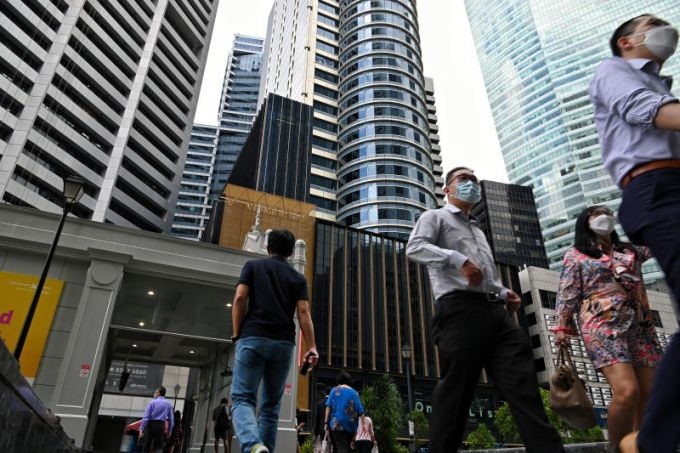
COMMERCIAL developments as well as the commercial component of mixed-use developments located in prominent areas and routes in Singapore's Central Area are no longer allowed to be strata subdivided into individual units.
This restriction also applies to redevelopment proposals under the Central Business District (CBD) Incentive and Strategic Development Incentive (SDI) schemes.
The Urban Redevelopment Authority (URA) announced the change on Tuesday (Mar 15), defining "commercial uses" to include offices, shops and restaurants.
Strata subdivided developments, due to their fragmented ownership, tend to face challenges in maintenance and upkeep. "For example, they may have difficulties in obtaining consensus to regularly maintain and/or upgrade the building, which can result in deteriorating physical condition, and in curating a good tenant mix," URA said.
The restriction on strata subdivision is thus meant to limit the number of strata lots within a development to avoid fragmented ownership. URA added that it aims to ensure the upkeep and quality of commercial properties in key parts of the Central Area, and ensure that redevelopment proposals under the CBD Incentive and SDI schemes "are well managed and maintained".
The new rule applies to developments in areas such as Orchard Road, Tanglin Road, Scotts Road (Orchard Road corridor), Shenton Way, Robinson Road, Anson Road, Raffles Quay, Raffles Place Park, and along the Singapore River (CBD corridor).
Developments near key landmarks of national significance - namely Parliament House, the Supreme Court Building, the Padang and the War Memorial Park - are also subject to the restriction.
The URA said that it "may also impose strata subdivision restrictions on other sites of strategic importance in Central Area and Outside Central Area based on the context and significance of each site".
In the case of existing developments that are strata subdivided - that is, developments that have obtained provisional permission or had submitted an application before Mar 15, 2022, leading to a provisional permission for their strata subdivision application - the restriction will apply to future redevelopment.
For all other developments, the new rule takes effect immediately, URA said.
Wong Xian Yang, Cushman & Wakefield's head of research, Singapore, said the latest restriction will be "slightly negative" for the investment prospects of the affected developments, as it removes a potential divestment route for developers and investors.
On the other hand, Huttons Asia senior director (research), Lee Sze Teck, sees the move as positive for the property market, as developers can build their source of recurring income to complement their development income. "Single-owner commercial developments will be easier to divest compared to strata-titled developments. It will allow owners to earn recurring income and also capitalise on future upside when they exit the investment," he added.
Meanwhile, Knight Frank head of consultancy, Alice Tan, expects existing strata-titled commercial buildings in the Central Area to become more popular. She noted that strata office units tend to appeal to smaller investors with more modest appetites.
Colliers noted that the restriction will limit the number of commercial strata units in the Central Area, with almost no new supply coming onto the market. "As they come at palatable prices, existing commercial strata units often appeal to family offices and high-net-worth individuals. Consequently, these units will be more highly sought after."
Strata office transactions in the central region amounted to about S$1.79 billion in 2021, almost double the volume in 2020, according to Colliers. Strata office buildings with the highest volume of transactions included Suntec City with 20 deals, and SBF Centre with 11 transactions.
The new guidelines also apply to locations with major retail areas, such as the Orchard Road shopping belt, and CBD areas with street-level shops that enjoy busy pedestrian traffic. Some of these shops are strata units owned by small investors or the shop operators, ERA Realty head of research and consultancy Nicholas Mak pointed out.
"Over time, as an increasing number of these commercial strata-titled properties are redeveloped, individual small investors will have fewer opportunities to invest in commercial strata units in those locations," he added.
He went on to note that if the owners of a building in the affected areas are planning a collective sale, the new restriction could either lower their chances of a successful en bloc deal or reduce the price.
"The modus operandi of some developers is to redevelop a building or land into strata units for sale, as this method can provide a relatively high rate of financial return within a given time, compared to holding the property for rental income. The new restrictions will therefore drastically lessen such developers' interest in the properties in the affected locations," Mak added.
When it comes to the tenant mix and management of the properties, analysts and consultants are generally in favour of the latest announcement.
Tan from Knight Frank said there is sometimes greater physical deterioration in strata subdivided commercial buildings, as the multiple owners are unable to find consensus in maintenance and upkeep.
"Additionally, fragmented ownership could invite a tenant mix that is confusing, without a common theme that accentuates a building's identity," she noted.
Huttons' Lee said commercial developments under a single owner tend to be better managed and achieve higher occupancy than strata-titled developments. "The tenant mix is better controlled, and that increases the value proposition of the asset class."
And according to Colliers, strata malls may be less resilient amid headwinds such as e-commerce and travel curbs, as collective action is often needed to introduce new concepts, and to market and position the properties. As a result, they fail to draw crowds and suffer from low footfall.
"Therefore, this restriction will prevent owners from trying to maximise fixed rents from subdivided units with little sharing of business operational risks. This will ensure that malls in Orchard Road remain well run," the firm added.
Colliers also described the restriction on strata subdivision as "timely" and a welcome development, as it is in line with the CBD Incentive and SDI schemes' goal of uplifting the image of the Central Area as a vibrant place for work, live and play. Introduced in 2019, the schemes offer incentives to rejuvenate the CBD and other strategic areas to encourage a better mix of uses and enhance urban vibrancy.
Wong from Cushman & Wakefield said that in all, he does not anticipate a huge impact on market sentiment. "Most investors acquire Singapore commercial properties for their stable income flows and would have a mid to long-term investment horizon," he added.
Appendices: URA Map for Restrictions on the Strata Supervision of Commercial Properties.
More News
Bugis Junction Towers put on the market at S$685 million valuation
This works out to S$2,750 psf on net lettable area and a net yield of around 3.5% for the fully let office asset Read MoreAllgreen Properties, Kuok Singapore complete purchase of 78 Shenton Way
The new owners are not expected to redevelop the asset in the near term; they will hold it as landbank Read MoreOne Raffles Place expected to be put on the market at S$2.3 billion to S$2.4 billion
All owners of the office and retail asset, above Raffles Place MRT station, are coming together for a potential sale Read MoreAmazon to exit Asia Square; Shell likely to take over its prime CBD space
The tech giant’s lease for 100,000 sq ft in Tower 1 is said to be expiring in July Read More
Citi Commercial Pte Ltd is founded in 2009. Since then, we have created a strong market presence in the commercial real estate consultancy with our dedication and consistent good service.
© Copyright 2026 Citi Commercial Pte Ltd :: Agency Licence No. L3009610D