





- News
- CICT, CapitaLand should snap up Bugis Junction Towers
CICT, CapitaLand should snap up Bugis Junction Towers
Earlier this year, CapitaLand is said to have looked at the Marina One office and retail asset, which was quietly put on the market with a price tag of around S$5.7 billion.
The property giant is currently actively participating in the bidding process for One Raffles Place, which is valued at nearly S$2.4 billion.
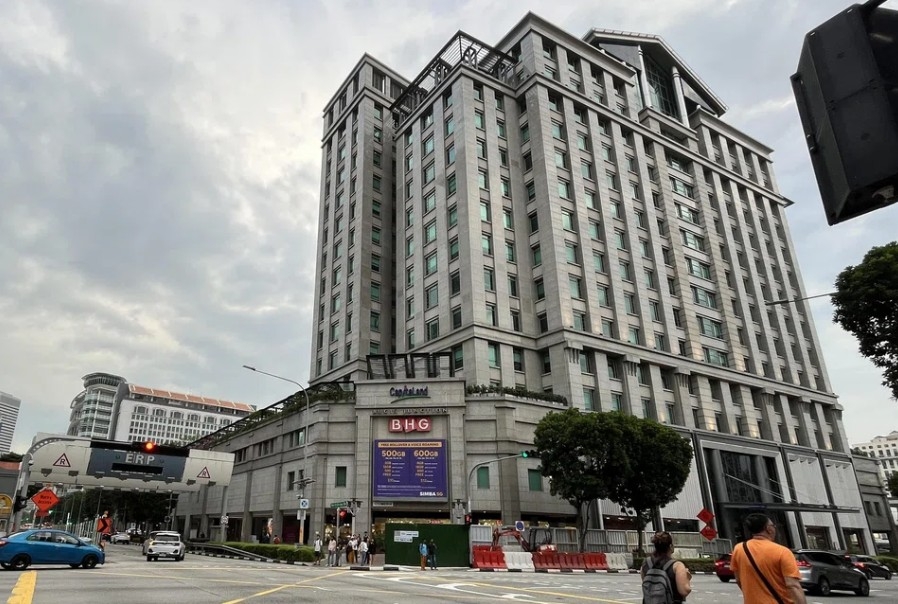
Alongside these big-ticket Singapore commercial properties, CapitaLand may want to take a closer look at Bugis Junction – an office, retail and hotel complex completed three decades ago and where it already has a presence.
CapitaLand Group comprises the listed real asset management business CapitaLand Investment (CLI) and the privately held property development arm CapitaLand Development (CLD).
One of CLI’s sponsored real estate investment trusts, CapitaLand Integrated Commercial Trust (CICT), owns Bugis Junction’s mall, which has a net lettable area (NLA) of about 392,800 sq ft.
The office component – Bugis Junction Towers – is owned by a consortium led by TPG Angelo Gordon, which put the property up for sale by private treaty a few months ago.
The guide price of S$685 million reflects around S$2,750 per square foot (psf) based on the net lettable area (NLA) of nearly 250,000 sq ft. The net yield is about 3.5 per cent. Bugis Junction Towers is fully leased with anchor tenant Enterprise Singapore occupying slightly more than half of the NLA.
On its own, Bugis Junction Towers may not look compelling enough to CICT at the moment.
However, acquiring the 15-storey office block now, while it is available, could put CICT and/or any of the other CapitaLand entities in a stronger position to exploit the rejuvenation or redevelopment potential of the overall Bugis Junction complex.
Hotel in the news
The hotel in the complex was in the news just a couple of weeks ago. The 406-room Frasers House, a Luxury Collection Hotel, Singapore, is part of the S$2.1 billion proposed restructuring of Frasers Property Ltd’s (FPL) hospitality portfolio announced on Jun 25.
FPL currently owns 63.28 per cent of the hotel – formerly known as the InterContinental Singapore – which it plans to sell to TCC Group Investments (TCCGI), an entity under TCC Assets, FPL’s majority shareholder.
TCC Assets is controlled by Thai tycoon Charoen Sirivadhanabhakdi and his family.
The restructuring will result in TCCGI taking full ownership of the hotel in the Bugis Junction complex from a 36.72 per cent stake currently.
If FPL’s restructuring plans come to fruition, CICT and/or other CapitaLand entities would have to engage TCCGI in future to jointly explore a redevelopment of the overall Bugis Junction complex even if, say, CICT has acquired Bugis Junction Towers by then.
Such a collaboration could be styled along the lines of what CapitaLand Development (CLD), City Developments Limited (CDL) and CapitaLand Ascott Trust (CLAS) have done on the old Liang Court site in River Valley Road under a deal struck in 2019.
The two heavyweight property developers joined forces to transform the ageing property into a spanking new integrated project along the Singapore River – comprising a for-sale residential component (the 696-unit CanningHill Piers), a retail podium (CanningHill Square), the 475-room Moxy Singapore Clarke Quay (to be sold to CDL Hospitality Trusts under a forward purchase agreement with CDL), and the Somerset Clarke Quay Singapore, a 192-unit serviced residence with a hotel licence (owned by CLAS).
The project is expected to receive its Temporary Occupation Permit by the fourth quarter of this year.
What’s Bugis Junction’s redevelopment angle?
Let us have a closer look at what redevelopment opportunities beckon for Bugis Junction.
The Bugis Junction complex, completed in 1995, is on a site of about 277,000 sq ft with 99-year leasehold tenure from September 1990; this leaves a balance of about 63 years.
The existing gross floor area (GFA) is understood to be about 1.28 million sq ft, or 4.63 times the site area. In short, the 4.5 plot ratio accorded to the commercial-zoned site under the Urban Redevelopment Authority’s (URA) latest Master Plan has been maximised.
Nevertheless, the owners of Bugis Junction may have a credible case to explore additional GFA, a taller development, and/or a more flexible land-use mix, under URA’s Strategic Development Incentive Scheme, which was updated in February last year.
A key point to note is that Bugis Junction is not just an individual office building. It is a large integrated complex – comprising offices, a mall and a hotel – strategically located above a major MRT interchange linking the East-West and Downtown lines.
Connectivity and overall transport efficiency will be boosted by the upcoming North-South corridor.
Bugis Junction stands on a substantial site with quadruple frontages along Victoria Street, Rochor Road, North Bridge Road and Middle Road, and it is located within the wider Bugis/Beach Road growth corridor.
A vital part of a redevelopment proposal for Bugis Junction could be to introduce a meaningful long-term residential component, suggested some industry players. This would strengthen the live-work-play positioning of Bugis. A community and civic element could also be added in.
A redevelopment proposal needs to be framed around public planning benefits, precinct improvement, mixed-use vibrancy and integrated development.
Retrofitting parts of the existing property
A rejuvenation of Bugis Junction need not involve a total teardown and new build. Retrofitting parts of the existing development and adaptive re-use would be very much in the spirit of the updated Strategic Development Incentive Scheme.
Neither does a redevelopment need to be undertaken in the short term.
CICT and/or other CapitaLand entities are uniquely qualified to take Bugis Junction to the next level. Among the existing owners of the three components, the group is the only one that has been involved with the site from Day One.
Pidemco Land, before its merger with DBS Land in 2000 to form CapitaLand, was part of the consortium that clinched the site at a URA tender in 1990 and developed it.
Of course, other parties with dry powder may also scoop up Bugis Junction Towers to position themselves for the potential upside.
Carpe diem. CICT and/or other CapitaLand entities should snap up Bugis Junction Towers and then spearhead a rejuvenation of the whole complex and the area in the medium term.
Beyond making profits, conscious decisions to uplift the broader neighbourhood or precinct can result in truly transformational outcomes, executed by developers with both the will and the wherewithal.
More News
Deloitte Singapore set to move out of Shenton Way base to Orchard Central in 2027
The consultancy will be occupying JustCo’s new co-working space in Orchard in the interim Read MoreJustCo takes over master tenancy at OG Orchard Point building with push into co-living market
JustCo Place integrates co-working, retail space with 123 apartments; Deloitte to fully occupy its co-working space Read MoreCICT, CapitaLand should snap up Bugis Junction Towers
The group has the heft to spearhead a redevelopment of the entire complex and transform the surrounding area Read MoreFrasers Property said to be nearing deal for Cuppage Terrace
The price is expected to be between S$175 million and S$180 million Read More
Citi Commercial Pte Ltd is founded in 2009. Since then, we have created a strong market presence in the commercial real estate consultancy with our dedication and consistent good service.
© Copyright 2026 Citi Commercial Pte Ltd :: Agency Licence No. L3009610D